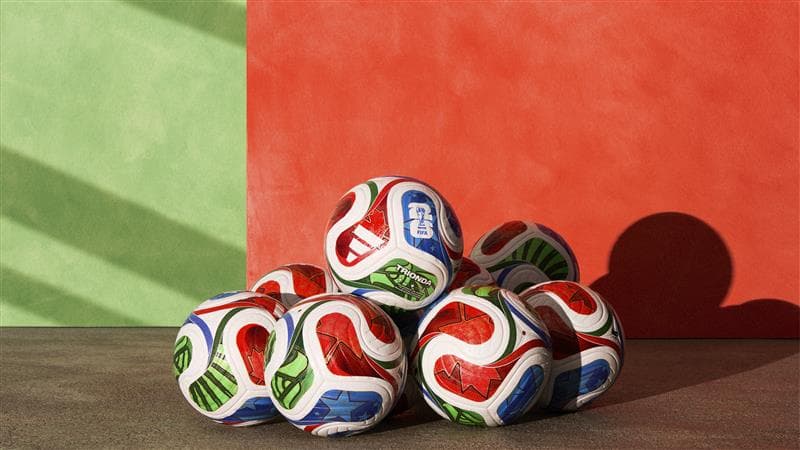
The 2026 FIFA World Cup hasn't just been a tournament — it's been an advertising arms race. Brands have poured a record wave of spend into the moment, and two campaigns in particular have dominated the conversation: Nike's star-stacked
and LEGO's quietly emotional
Both went viral. Both got written up everywhere from Ad Age to The Drum. But "viral" doesn't tell you whether an audience actually
what they just watched — and that's the question we set out to answer using
's AI Cohorts, which simulate how real audience segments respond to a message before it ever reaches them. We ran both campaigns through three cohorts —
,
, and
— and scored each on six dimensions: Logic & Reasoning, Clarity & Understanding, Emotional Resonance, Value Alignment, Resistance & Skepticism, and Persuasiveness & Appeal.
Here's what came back.
The Contenders
A six-minute, 30-plus-star ensemble film built around a Hollywood movie set where an overbearing director tries to force football into a scripted, controlled performance. The players keep breaking character — dribbling through set pieces, bursting into other shoots — until the "script" collapses entirely. The cast spans football (Ronaldo, Mbappé, Haaland, Vini Jr.) and culture at large (LeBron James, Travis Scott, Lisa of BLACKPINK, Kim Kardashian, Central Cee).
A much smaller, much quieter premise: four football legends — Messi, Ronaldo, Mbappé, and Vinícius Jr. — sit around a table, each trying to be the one to place the final piece on a LEGO replica of the World Cup trophy. Before any of them can finish it, a young boy walks in, completes the build himself, and adds his own personalized minifigure on top. A behind-the-scenes reveal later showed the four athletes were never actually filmed together — the shot was stitched together with body doubles and CGI, a detail that became its own mini-controversy under the hashtag #HonestlyItsNotAI.
On paper, these are opposite strategies: maximalist star power vs. a single, small human gesture. Our testing found they're actually failing — and succeeding — for the same reason.
Nike: Energy is not the same as substance
Across every cohort, Nike's scale generated genuine excitement. The cast was described as visually energetic, the "ditch the playbook" framing landed as a celebration of instinct and freedom. But that energy ran out of road quickly once each cohort was asked to dig past the surface.
were direct about it:
“"Too many big names and not enough real voices from our communities."”
“"The idea of ripping the script sounds cool but who is really in control here."”
This cohort scored the campaign just 5/10 on Logic & Reasoning and 5/10 on Emotional Resonance — not because the premise didn't land, but because, in their words, it "lacks any real evidence or connection to our daily concerns like climate or fairness." Value Alignment came in slightly higher at 6/10: the freedom-and-authenticity message does match what this audience says it wants. The celebrity density is what undercuts it.
read the "rip the script" framing almost as a deregulation metaphor — and liked it more than expected:
“"Ditching the playbook sounds like cutting regulatory red tape which we support."”
But the approval was conditional. This cohort wanted the campaign to do something Nike's film never attempts: make a business case.
“"Too many hollywood names distract from real performance and results."”
“"Lacks any metrics on competitiveness or innovation."”
Their Persuasiveness & Appeal score landed at 5/10 — "moderately persuasive on the freedom angle but weakened by absence of economic rationale and excessive star power."
gave Nike its highest Clarity score of the three cohorts (7/10) but its lowest Value Alignment score (4/10):
“"The cast feels overloaded with influencers who may not embody genuine football passion."”
“"Rip the script sounds fun but lacks any nod to sustainability or community impact."”
The pattern across all three groups is consistent: Nike's scale buys attention, not conviction. Every cohort could describe what the ad was
. Far fewer could say what it was
.
LEGO: the smallest moment in the ad outperformed the biggest names in it
LEGO's campaign tells a very different story — and a more interesting one, because the same emotional beat won every cohort, while the same production detail cost it trust in every cohort.
The strength was consistent and specific: it wasn't Messi, Ronaldo, Mbappé, or Vinícius Jr. that resonated. It was the boy who finished the build.
“"The boy finishing it himself feels real and relatable to us."”
“"The boy finishing the build shows real empowerment we can relate to."”
“"We appreciate the call for instinctive play as it aligns with trusting our own voices." (echoed almost identically in their reaction to Nike — this audience consistently rewards anything framed as self-directed rather than performed.)”
But every cohort also flagged the same fracture point: once they learned the four football stars were never filmed together, the "honesty" framing of the campaign's own hashtag started working against it.
“"The cgi reveal makes us question if anything is genuine anymore."”
, true to form, read the same issue through a different lens — not as a trust problem, but as a strategic miscalculation:
“"The CGI reveal adds unnecessary complexity without clear market benefit."”
“"The manufactured debate risks appearing deceptive rather than innovative."”
connected it directly to their values around transparency:
“"We resist the hidden production methods because they contradict our value for transparency and responsibility in media."”
Tellingly, this is the one weakness that shows up as the
listed weakness in all three cohort reports — "authenticity gap" appears almost verbatim across Gen Z and Educated Young Women, and as "ai gimmick" for Free-Market Conservatives. A single production choice — revealed after launch, not before — undid a meaningful share of the goodwill the human moment had built.
The pattern that holds across both campaigns
Lay the two campaigns side by side and a single throughline emerges:
Nike's weakness was structural: more than 30 cast members, and not one moment the audience could point to as
. LEGO's weakness was a single revealed production trick that retroactively poisoned a moment that had, up until that point, tested as the strongest emotional beat across every cohort.
Neither failure was about football. Neither was about budget. Both were about whether the audience felt like a participant in the story or a target for it.
Why this matters before the next campaign launches
This is exactly the gap concept testing is supposed to close — and exactly why we built Retora to score messages the way real audiences actually argue about them: logic, clarity, emotional pull, value fit, resistance, and persuasiveness, broken out cohort by cohort instead of averaged into a single meaningless number.
If you're sitting on a campaign with star power, a stunt, or a "the internet won't believe this" twist, the question worth asking before launch isn't "will this get attention" — it almost certainly will. It's:
